

How To Texture Ceiling Repair
Have water damaged textured ceilings or need to patch a hole? Almost every wall develops flaws at some point, simply y'all tin can perfectly repair a textured ceiling with these tips and step by step instructions.
I volition be the outset to admit that I may not be the biggest fan of textured ceilings. While they hibernate imperfections extremely well, textured ceilings concenter dust and are more difficult to paint and repair.
Only at that place are the memories! I can remember staring up at ours and seeing different images in them – sort of like deject watching. Mostly flowers or stars, merely occasionally a witches cruelly smiling face or Snoopy laying atop his dog house.

Now removing a textured ceilings in large rooms can be a very large job. This firm is going up for sale, so repairing spots is much more manageable. We love repairing older homes including repairing baseboards, painting kitchen cabinets, and full bathroom remodels , and so this was one of our easier jobs!
The specific texture can be a challenge to replicate and lucifer to the surrounding textured surface. Merely I'thousand showing yous information technology is pretty easy once you get the correct tools!
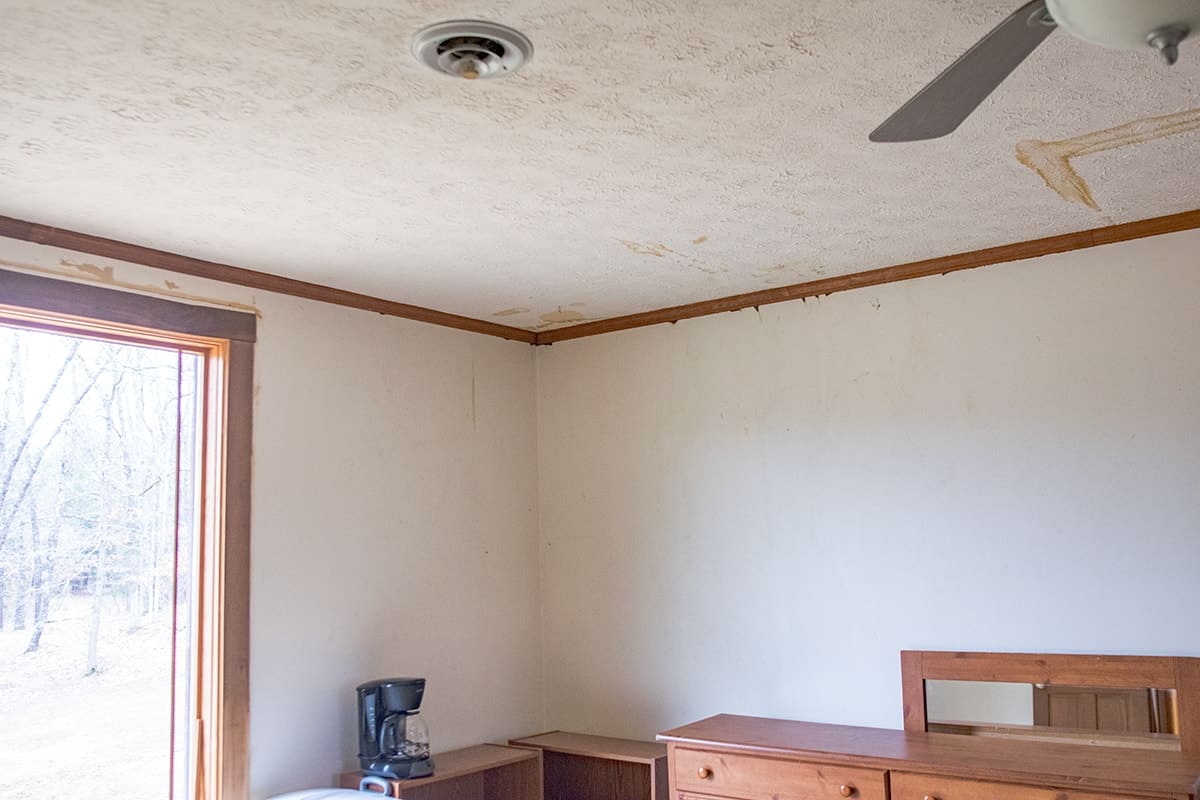
In our case, the damage was from a leaky roof several years agone. The roof had been replaced and there was no mold, so at present it was time to repair the ceiling.
How to Hide Ceiling Stains
Showtime, non all water damage requires removing or patching the ceiling. Some impairment tin can just be water stains if the ceiling texture isn't chipping, falling or molding. In those cases, use an droplets sealer similar my favorite from Kilz. This sealer hides discoloration and stains like smoke, h2o stains, and cooking oils.
Subsequently the sealer dries, paint the expanse with ceiling paint. You volition probably have to paint the unabridged ceiling since it can exist difficult to match the previous color.
Ceiling Texture Types
Repairing a pigsty or damage to a textured ceiling depends on your ceiling texture type. Types of ceiling texture include
- Knockdown texture
- Orange peel texture
- Crow's foot
- Popcorn
The single hardest part of this job is figuring out which ceiling texture type yous take. Here is a handy list of ceiling texture types and the tools used to create them:
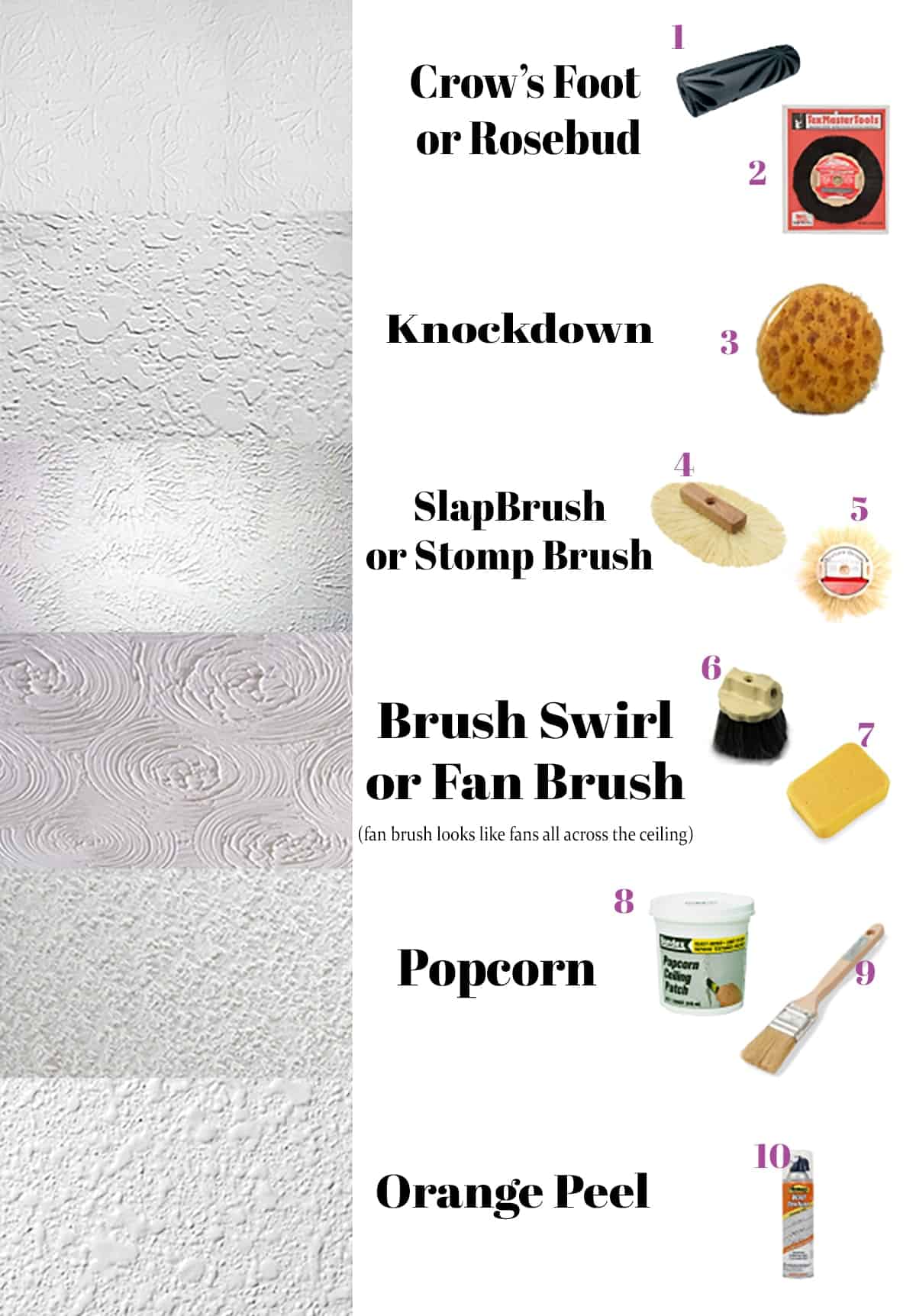
Find them by clicking the corresponding number:
1 | 2 | 3 | 4 | 5 | 6 | 7 | 8 | ix | 10
Now, this list is by no means comprehensive. There are as many ceiling textures types as in that location are people who create them. Feel free to inquire any questions if you lot take a particular type of ceiling texture.
Step by Pace Instructions
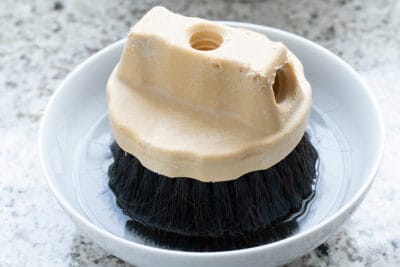
ane. Soak Ceiling Texture Brush
With the exception of the orange peel and popcorn ceilings, all of the other textures use joint compound and corresponding castor to create the pattern. For brush textures, soak the brush in warm h2o for at least an 60 minutes, or overnight. This softens the bristles to create the right texture for your ceiling.
2. Prepare the Surface
Remove whatever loose ceiling texture from the old ceiling and repair holes. I usually find that if you can get under information technology with a putty knife, it will come off pretty easily.
If you accept any h2o impairment, I highly recommend using a stain blocker like this spray stainblocker to keep the erstwhile water damage from bleeding into paint.
Pro Tip: The 1 affair I endeavor to practice when patching a textured ceiling is to make sure I don't have any long, straight lines between the former and new. An irregular edge makes it easier to hide a patch to the observer.
3. Use Joint Compound
The technique volition vary slightly with what texture yous are trying to match, simply hither are the basics.
- Mix the joint compound with a paddle and drill or pocket-sized portion with a pigment stick or large spoon to loosen and remove bubbling.
- Exam out your pattern on a spare board or extra piece of drywall until yous become the right texture. I discover that starting time working the compound into the castor makes the pattern more than even when applying.
- Once your ready to motion on to the real area, spread the joint compound on with a putty knife across the surface area to be patched. Endeavour to blend any edges with the existing texture. You aren't trying to create texture yet, merely get it upward on the ceiling relatively smooth. Don't exist shy with it either, put information technology on at roughly as thick as the existing texture.
- Using your texture tool, stomp the texture into the practical joint compound in the same way as the practice board.
- If you have a knockdown ceiling, yous will have to use a big putty scraper to go across the texture to smooth it to the knockdown texture. Wait a few minutes later on the applied texture is set before knocking-down.
four. Paint
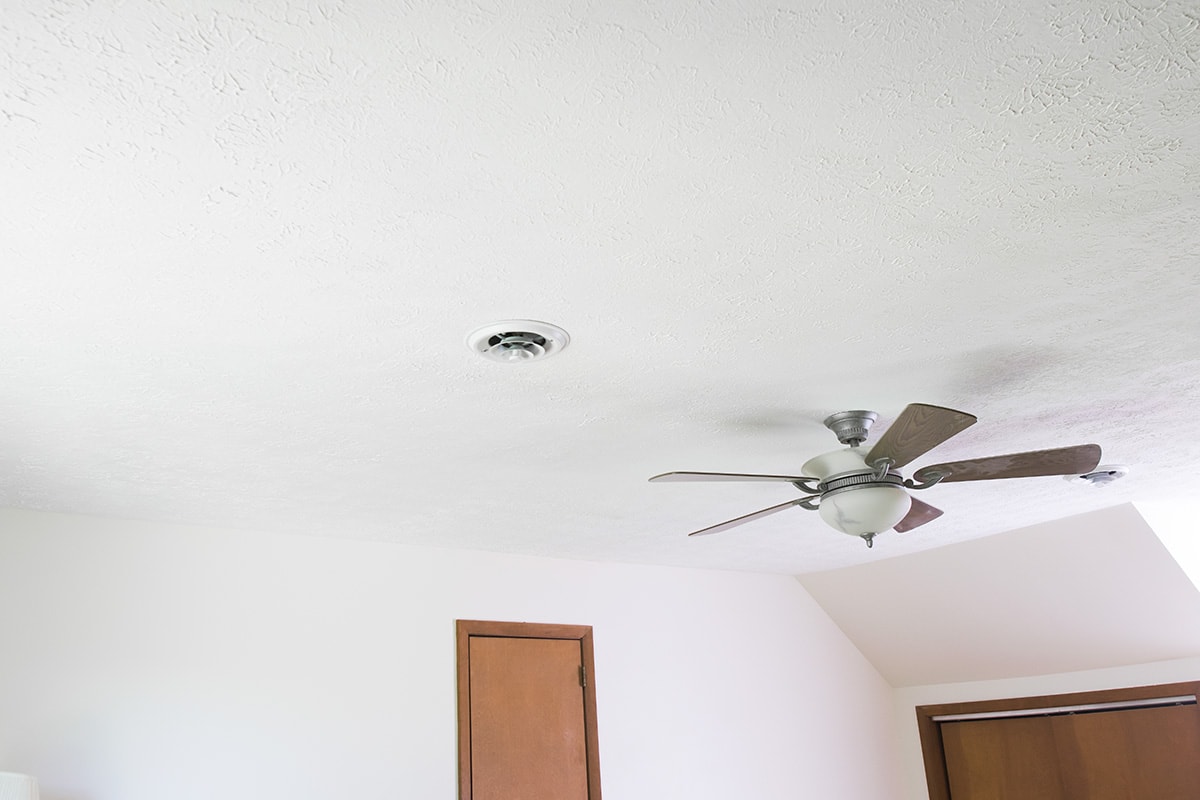
Once you've accomplished the pattern or texture you desire, await overnight or longer before painting.
Pro Tip: White ceiling paint is very hard to friction match perfectly, so plan to paint the whole ceiling unless you don't mind a line where you patched.
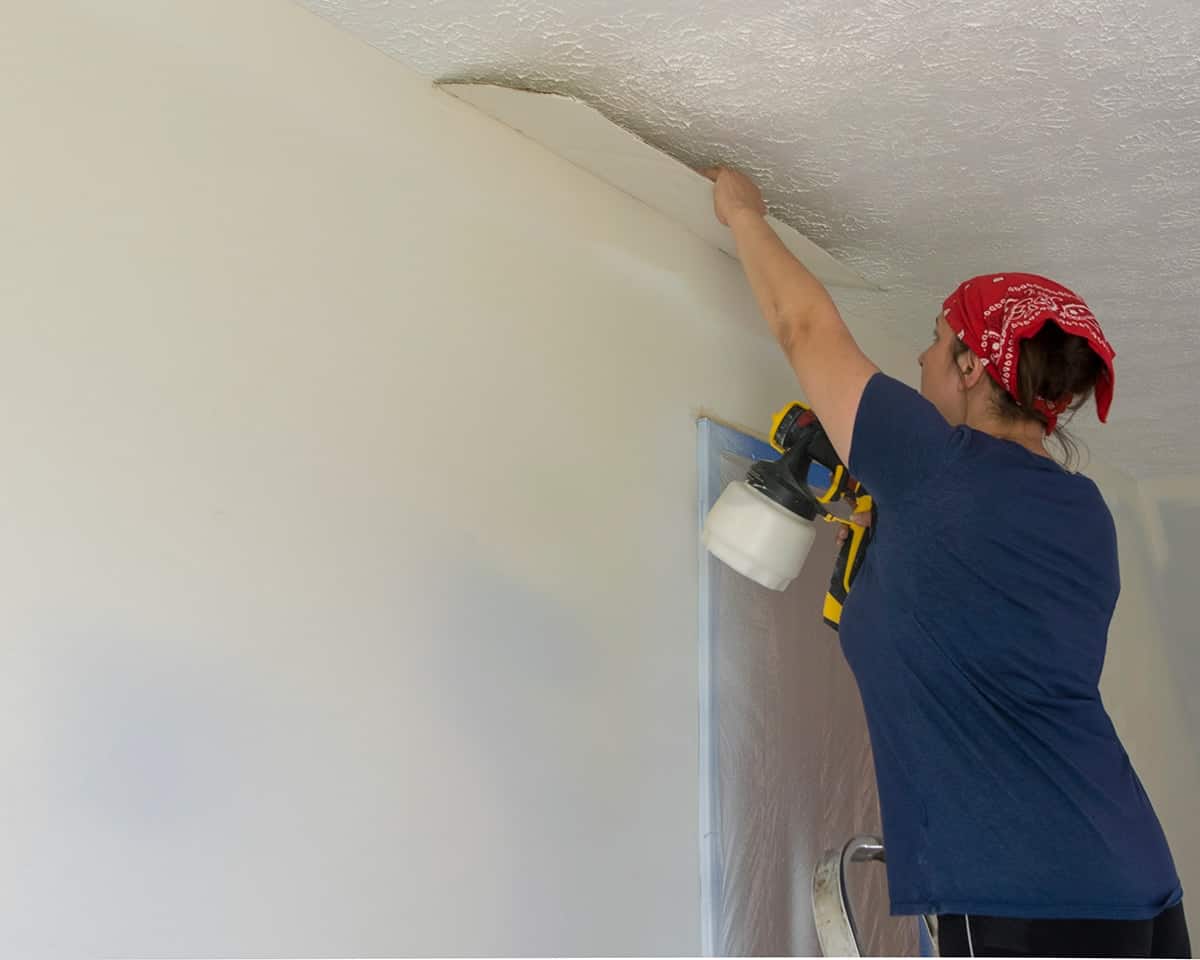
We used our handy paint sprayer to pigment both the ceilings and the walls, which made information technology happen in maybe ⅕ the fourth dimension it would have taken! Yes, your artillery volition ache spray painting a ceiling, simply honestly they are going to ache with a roller.
FAQs
Are textured ceilings outdated?
Textured ceilings are indeed outdated. While they hide imperfections extremely well, textured ceilings attract dust and are more hard to pigment and repair.
What is the difference between a popcorn ceiling and a textured ceiling?
Popcorn ceilings are different from other textured ceilings considering popcorn is usually sprayed on, whereas textured ceilings are created from applying plaster in a pattern with a decorative brush.
Do I demand special paint for a textured ceiling?
There are no special requirements for a textured ceiling vs a polish ceiling paint.
Is removing textured ceilings expensive?
Materials required to brand ceilings smooth is about $100-150, including stripper, scrapers, and sanding materials. Yet, this chore can be extremely labor intensive if the ceilings accept been painted multiple times. Truthfully, in a few cases, I have considered re-drywalling easier than removing the texture because it can be so labor intensive.

Sign up below to receive updates including free printables, organization tips, dwelling house comeback projects, recipes and more!
More Painting DIY Tutorials
-

How to Spray Paint Outdoor Furniture -
Installing Wainsccoting -

Paint Garage Doors -
How To Paint A Vanity
PS I love seeing your creations! Exist sure to take a photo and tag#cravingcreative on Instagram! You can as wellstay in touch with me through post-obit me on Instagram, Pinterest, and Subscribing to the Newsletter!
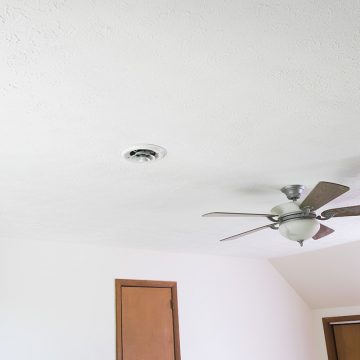
-
Wide Putty Scraper
- Stainblocking Primer
- Articulation Compound or Spackle
-
For brush textures, soak the castor in warm water for at least an hour, or overnight. This softens the bristles to create the correct texture for your ceiling.
-
Remove any loose plaster past scraping off with a dry putty pocketknife. If you accept stains, apply a stain blocker like this spray stainblocker to keep the damage from bleeding into pigment.
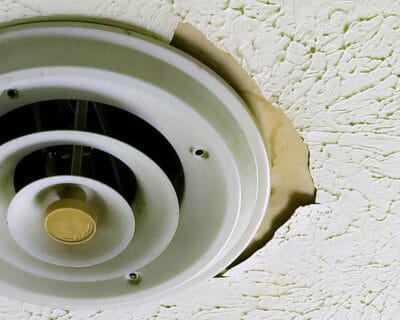
-
Apply joint compound. Test out your pattern on a spare board or extra slice of drywall until you become the right texture. One time your set to move on to the real surface area, spread the joint compound on with a putty knife or magic mudder across the area to be patched. Try to blend whatsoever edges with the existing texture.
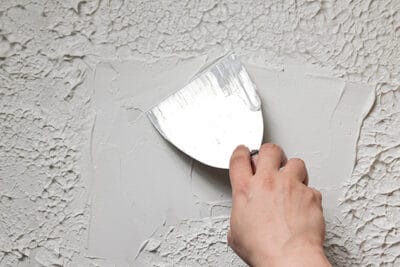
-
Using your texture tool, stomp the texture into the applied joint chemical compound in the same fashion as the practise lath. If you have a knockdown ceiling, yous will have to use a large putty scraper to go across the texture to smooth it downwards to a knockdown texture.
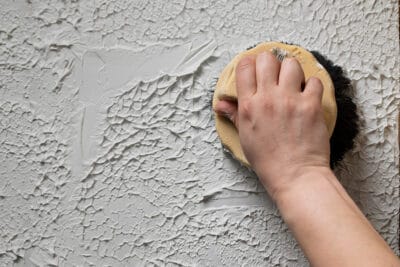
-
Once yous've accomplished the pattern or texture you desire, await overnight or longer before painting.
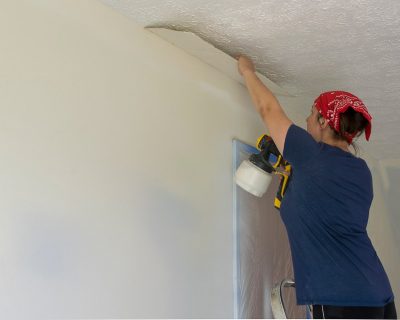
General Tips
- The single hardest part of this task is figuring out which ceiling texture type you take. We take a handy listing in the post to compare.
- With the exception of popcorn and orange pare, all textures are applied using a corresponding brush to create the pattern. Popcorn and orangish skin are made using a spray.
- An irregular edge on the patch area makes it easier to hide a patch to the observer.
- White ceiling paint is very hard to match perfectly, so plan to paint the whole ceiling unless you lot don't mind a line where you patched.
Source: https://www.cravingsomecreativity.com/how-to-repair-textured-ceiling/
0 Response to "How To Texture Ceiling Repair"
Post a Comment